
If you’ve spent any time researching ayahuasca retreats, you’ve probably noticed the prices are all over the place. One center charges $600, another wants $6,000, and it’s hard to tell what you’re actually paying for. So let’s break it down.
A week-long ayahuasca retreat generally runs somewhere between $1,200 and $3,500, depending on where you go, who’s running it, and how many people you’ll be sharing the experience with. But the number on the website only tells you part of the story. What matters more is what happens inside that price.
A few things push the price up or down.
Location is the first one. Retreats in Peru and Colombia tend to sit at the lower end, since that’s where the tradition comes from and where operating costs are lower. Programs in Costa Rica, the US, or Europe usually cost two or three times as much, largely because they’re importing facilitators and paying Western-level rent and staff wages.
Duration matters too, obviously. A short 3 to 4 day program might start around $700 to $1,000. A proper week-long retreat with several ceremonies, preparation, and integration support will usually land between $1,500 and $3,000. Longer diets and multi-week programs go up from there.
Then there’s what’s included. Are meals part of the price, or extra? Is there an airport pickup? Are integration sessions built in, or do you have to ask for them separately? A retreat that looks cheap on paper can end up costing more once you add in the things that should have been there from the start.
And then there’s the one factor people tend to underestimate: how many people are in the room with you during ceremony.
This is the part that probably makes the single biggest difference between a retreat that genuinely helps someone and one that just looks good in the photos.
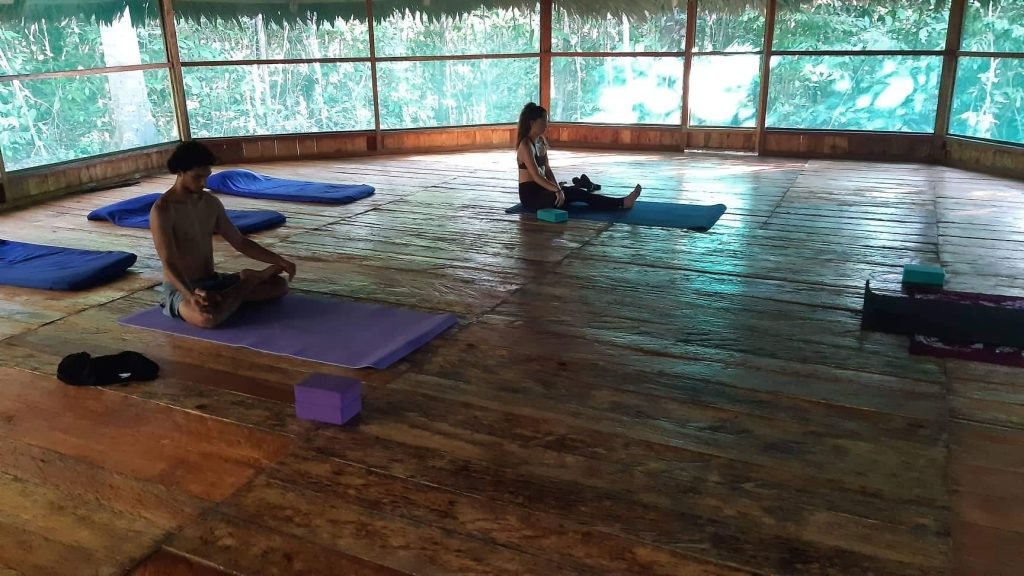
Picture a ceremony with twenty, thirty, sometimes even fifty participants lying on mats in a big maloka. The shaman is doing their best, but they physically cannot give real attention to that many people at once. If something difficult comes up for you mid-ceremony, (and something usually does), you might wait a long time before anyone even notices. In a group that size, you’re one of many. Your experience becomes something you go through largely on your own, surrounded by strangers.
Now picture a ceremony with five people. The facilitator knows your name, your history, your intention for being there. If you’re struggling, someone is at your side within a minute, not twenty. The energy in the room is calmer, because there’s simply less noise, fewer unpredictable reactions to manage, and more room for each person’s process to unfold without being swallowed by the group. We have found that personal space in ceremonies is priceless.
This isn’t a small detail. Ayahuasca can bring up things that are heavy: grief, trauma, fear, old memories the mind had tucked away. A facilitator’s ability to actually be present with you when that happens is not optional, it’s the whole point of having a facilitator in the first place. A retreat with five participants isn’t smaller because it’s less ambitious. It’s smaller because that’s the number of people one team can genuinely hold.
There’s also something less obvious that happens in small groups: trust builds faster. By the second or third day, you actually know the four other people around you. You’ve eaten meals together, sat through integration circles together, maybe cried in front of each other. That kind of closeness rarely happens in a group of thirty, where half the faces change from ceremony to ceremony and conversations stay surface-level. The people you share this with become part of what makes the work land, and very often can become your lifelong friends.
Then, there is the duration…. A single ceremony, on its own, rarely does the deep work people are hoping for. The real value of ayahuasca work comes from the structure around it: the days of preparation before, the space to rest between ceremonies, and the time afterward to sit with what came up.
A week gives you room to follow a traditional dieta, which quiets the body and the mind before you even sit down for the first ceremony. It gives you two, three, sometimes four ceremonies spaced out enough that you’re not just piling experience on top of experience without processing any of it. And it gives you daily integration, whether that’s a group circle, a private conversation with a facilitator, or simply quiet time in nature to let things settle.
Try to compress that into two or three days and you’re rushing something that was never meant to be rushed. This is also part of why a small group matters for a full week: spending seven days with the same four people, eating the same meals, walking the same paths through the forest, creates a kind of container that a rotating, oversized group simply can’t offer.
When you’re comparing retreats, the price tag alone won’t tell you much. Ask instead:
- How many participants will be in ceremony with me?
- Who is leading the ceremonies, and what’s their background?
- Is there a real screening process before I’m accepted?
- What does integration actually look like, day by day?
- Is the accommodation private, or will I be sharing a dorm with people I’ve never met?
- What happens if I have a hard moment during ceremony? Who is watching?
A retreat priced at $1,000 that packs thirty people into one maloka with a single facilitator is not the same product as a retreat priced at $2,000 that limits itself to five participants, private rooms, and someone at your side the whole way through. They’re not even close, even though the difference on paper is a few hundred dollars.
Ayahuasca is not a spa treatment, and it shouldn’t be priced or chosen like one. The lowest price is rarely the best deal, and the highest price doesn’t automatically mean better care either. What actually matters is whether the people running the retreat have built something around your safety and your process, rather than around how many beds they can fill in a week.
A small group, a full week, real preparation, and real integration, that combination costs more to run than a mass retreat, because it requires more staff time and more attention per person. But it’s also the difference between an experience you go through and one you’re actually held through.
If you’re weighing your options, don’t just ask what a retreat costs. Ask what it’s built to protect: your attention, your safety, and the space you’ll need to actually process what comes up. That’s worth paying for.
This is exactly why we’ve built our retreats the way we have. Our week-long program is $1,375 and includes everything we talked about above: groups capped at 5 participants, private bungalows so you have your own space to rest and process, and both personal and group integration sessions built into every day of the week, not offered as an afterthought.
Our shaman also lives on site. That’s not a small detail either. It means the person guiding your ceremonies isn’t flying in for the week and leaving right after, he’s there before you arrive, available if something comes up between ceremonies, and present for the full arc of your stay. If a question surfaces at breakfast or a memory resurfaces the night after ceremony, you’re not waiting for the next scheduled session to talk about it.
We’d rather run a smaller, more attentive retreat than a bigger one that looks impressive from the outside. If that’s the kind of week you’re looking for, you can see our full program and dates here. Check it at www.naturaliaretreat.com


